
The Machinist Shortage: Why Manufacturers Can’t Find Skilled CNC Operators
Across the manufacturing industry, one problem continues to surface in conversations with plant managers, operations leaders, and manufacturing executives.
Companies are struggling to find skilled CNC machinists.
Facilities running CNC mills and lathes often have open positions that remain unfilled for months. When qualified candidates do appear, they are usually competing offers from multiple manufacturers looking to fill the same roles.
For many organizations, the talent pool feels almost nonexistent.
While it may appear to be a hiring problem on the surface, the machinist shortage is actually the result of several deeper trends that have been building for decades.
Understanding these trends is critical for manufacturers who want to develop a sustainable workforce strategy.
A Workforce That Is Aging Out
One of the largest contributors to the machinist shortage is the retirement of experienced workers.
Many skilled machinists entered the trade during the manufacturing expansion of the 1970s, 1980s, and 1990s. These individuals spent decades mastering their craft and became the backbone of machining operations across the industry.
Today, a large percentage of those machinists are reaching retirement age.
As they leave the workforce, they take decades of knowledge with them.
Unfortunately, the number of new machinists entering the trade has not kept pace with the number leaving it.
This creates a widening gap between the demand for skilled machinists and the available supply.
The Decline of Trade Training
Another factor contributing to the shortage is the decline of vocational training programs.
For many years, high schools and community colleges offered strong machining and trade programs that introduced students to manufacturing careers. These programs served as a pipeline that helped prepare young workers for careers as machinists.
Over time, many of these programs disappeared.
Educational systems began placing greater emphasis on four-year college paths, often at the expense of skilled trade education.
As a result, fewer students were exposed to machining as a career option.
The pipeline of entry-level machinists began shrinking long before the industry fully realized the impact.
Modern Machining Is More Complex
At the same time the workforce pipeline was shrinking, the technical complexity of machining was increasing.
Modern CNC machining requires more than simply running parts on a machine.
Operators and technicians must understand:
• blueprint reading
• measurement and inspection
• tooling and offsets
• feeds and speeds
• program logic
• process stability
Many machining roles now require a combination of technical skill, mechanical aptitude, and analytical thinking.
This raises the bar for new entrants into the field.
Companies are no longer just looking for machine operators. They are looking for individuals capable of managing increasingly sophisticated manufacturing processes.
The Competition for Skilled Machinists
Because the supply of skilled machinists is limited, companies are now competing heavily for experienced workers.
When a skilled machinist becomes available in the job market, multiple companies often pursue the same individual.
This leads to:
• higher recruiting costs
• wage escalation
• long vacancy periods for open positions
Even when a company successfully hires an experienced machinist, they must often compete to retain that employee.
Recruiting alone has become an increasingly difficult strategy for solving workforce challenges.
Why Hiring Alone Won’t Solve the Problem
Many manufacturers continue to approach the machinist shortage as a recruiting challenge.
They increase wages, expand job postings, and work with recruiting agencies to locate candidates.
While recruiting remains important, it cannot solve the underlying workforce issue by itself.
The fundamental problem is that the supply of skilled machinists is simply too small to meet industry demand.
When every company is competing for the same limited talent pool, recruiting becomes a zero-sum game.
One company may fill a role, but another company will still be left searching.
This reality is forcing more manufacturers to rethink how they develop their workforce.
Looking Inside the Organization
Many manufacturing facilities already have individuals capable of becoming skilled machinists.
These employees may currently work in roles such as:
• machine tending
• assembly
• secondary operations
• inspection
• material handling
While they may not yet possess machining experience, many already demonstrate the most important traits required for success.
These traits include:
• strong work ethic
• reliability
• attention to detail
• mechanical curiosity
• willingness to learn
These qualities cannot easily be taught.
But machining skills can.
When organizations begin viewing their workforce through this lens, they often discover that potential machinists are already inside their facility.
They simply need the opportunity to develop.
The Return of Apprenticeship Thinking
For decades, machining skills were traditionally developed through apprenticeship-style learning.
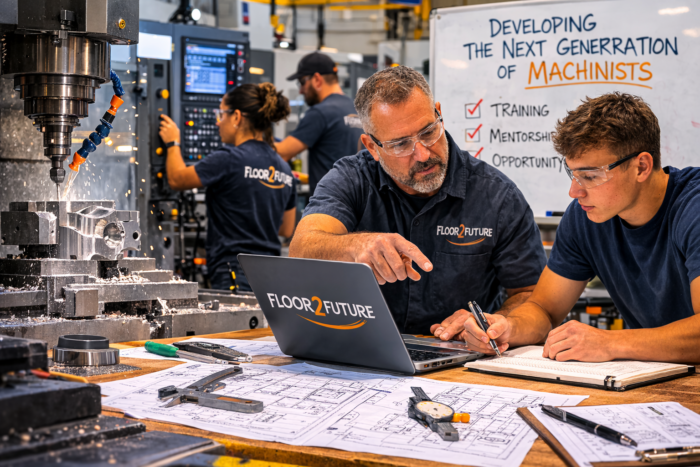
Experienced machinists mentored younger workers, gradually transferring knowledge and technical skill through hands-on experience.
While many companies moved away from formal apprenticeship models, the concept is now gaining renewed attention.
Internal apprenticeship programs allow manufacturers to create structured development paths that guide employees from entry-level roles into skilled machining positions.
Instead of hoping to recruit experienced machinists, companies can begin developing them internally.
This approach creates a sustainable talent pipeline that strengthens the organization over time.
Combining Hands-On Training with Structured Learning
One of the challenges of apprenticeship programs is ensuring that training is consistent and measurable.
Traditionally, training relied heavily on verbal instruction and informal mentoring. While mentorship remains extremely valuable, it can sometimes lead to inconsistent knowledge transfer.
Modern apprenticeship programs are increasingly combining hands-on shop floor training with structured learning systems.
Online training modules, knowledge testing, and development milestones allow companies to create clear learning paths for apprentices.
This ensures that employees not only gain practical experience but also build the technical knowledge required to succeed in machining roles.
The Future of the Manufacturing Workforce
The shortage of skilled machinists is not likely to disappear in the near future.
Manufacturers who rely solely on external hiring will continue to face increasing difficulty filling critical roles.
Organizations that begin developing their own talent pipelines will be better positioned to adapt to this changing workforce landscape.
By identifying motivated employees and creating structured development opportunities, companies can build the next generation of skilled machinists inside their own operations.
The future of manufacturing workforce development will depend not just on recruiting talent—but on cultivating it.
How Floor2Future Can Help
Floor2Future works with manufacturing organizations to address workforce challenges through a combination of recruiting support, apprenticeship program development, and structured training systems.
Through online training modules, testing systems, and apprenticeship frameworks, Floor2Future helps companies develop skilled machinists from within their workforce while strengthening long-term talent pipelines.
To learn more about building a sustainable manufacturing workforce, visit:
Floor2Future.com