Search for:
Why Free Training? Because the Industry Needs You

Manufacturing in the United States is growing faster than it has in nearly 40 years. Billions of dollars are being invested into new factories, new technologies, and new production lines in industries like:

  • Automotive
  • Aerospace
  • Defense manufacturing
  • Computer chip fabrication
  • Robotics and automation
  • Industrial equipment
  • Precision machining

But here’s the problem:
Companies can’t find enough qualified people. Not even close.

There are thousands of open positions that pay extremely well — many of them reaching $60,000 to $100,000+ per year within a few short years — but employers are struggling because there simply aren’t enough workers with the right mindset, discipline, and foundation of skills.

That is exactly where Floor2Future.com steps in.

We designed our free training system to solve two problems at once:

  1. Give motivated people like you a pathway into a high-paying career.
  2. Give companies access to dedicated, trained workers they can depend on.

It’s a win for you, and it’s a win for the employers we work with.


Why Companies Trust Floor2Future Trainees

Every company we work with knows exactly what our program represents:
commitment, reliability, strong work ethic, and real readiness.

They know that the people who come through Floor2Future.com have:

  • Completed work ethic training
  • Learned the basics of manufacturing
  • Understood professionalism and communication
  • Completed free body language training
  • Learned how to navigate a manufacturing environment
  • Gained skills that make them productive on Day 1
  • Built habits that companies normally spend years trying to teach

This is why major employers want to hire through Floor2Future.com.
It’s why they trust our system.
It’s why the training you receive here matters — because your future employer will already know what you’re capable of before you ever walk through their door.

When you finish our free training, you aren’t “hoping to get hired.”
You are showing companies that you are prepared, disciplined, and ready to grow.

That’s the difference.


What You Get with Floor2Future’s Free Training

We don’t give you random videos or simple walkthroughs. We give you training that improves your real-world value — training designed by people who know manufacturing from the inside.

Here’s what you get:

1. Work Ethic & Accountability Training

Employers want people who show up, stay focused, and take pride in their work.
This training builds those habits.

2. Body Language & Workplace Behavior

Your presence matters. Your professionalism matters. Your confidence matters.
This module prepares you to walk into any manufacturing environment with the right mindset and behavior.

3. Safety & Basic Manufacturing Knowledge

Before you step onto a factory floor, you’ll understand:

  • Workplace safety expectations
  • Machine awareness
  • Typical product flow
  • How to avoid common errors

4. Introductory CNC Basics (Optional Pathway)

If you want to start down the CNC machining path — one of the fastest-growing, highest-paying fields in manufacturing — we prepare you with the fundamentals so you walk in confident, not confused.

5. Introductory GD&T & Blueprint Reading

Companies spend thousands training new hires on this.
You get it free.

6. Professional Communication Basics

Learn how to communicate like a high-value employee — one who moves up quickly.

7. Leadership Foundations (Optional Pathway)

If you want to move into team leadership or supervision, we give you the first steps — for free.

This isn’t just training.
This is career preparation for the new world of American manufacturing.


We Train You First — Then We Find the Job

Most staffing companies send you straight to work and hope for the best.
Floor2Future.com does the opposite.

We prepare you FIRST.

Once you complete your initial training, our team begins the job placement process:

  • We identify companies hiring in your area
  • We share your training achievements
  • We present you as a prepared, motivated, trained candidate
  • We match you with employers that align with your goals

This system is incredibly effective because employers already know:

✔ You’ve completed structured training
✔ You’ve shown discipline
✔ You chose to invest in yourself before they invested in you
✔ You’re not just “looking for a job”—you’re building a career

That level of commitment makes you stand out instantly.


A Pathway to Six-Figure Careers — For Anyone Willing to Work

CNC machinists, advanced machine operators, quality inspectors, maintenance techs, and team leads all regularly $80,000 to $100,000 a year in today’s manufacturing economy. Many go even go higher!

You don’t need a degree.
You don’t need experience.
You don’t need a perfect background.

You need:

  • Strong work ethic
  • Willingness to learn
  • Desire to grow
  • Consistency
  • A pathway into the field

Floor2Future.com gives you that pathway.


From the Manufacturing Floor to the Future of Your Career

The name Floor2Future represents exactly what this movement is about:

**From the manufacturing floor…

to the future of your career.**

We believe your starting point doesn’t determine your finish line.
You can begin as an entry-level worker and grow into:

  • Skilled machinist
  • Quality specialist
  • Production technician
  • Process improvement leader
  • Maintenance technician
  • Supervisor
  • Manager

Your effort — combined with our training and job placement — is the formula.


Start Today — No Resume Required

Whether you have a resume or not, we make it simple:

✔ If you have a resume:

Submit it. We’ll take it from there.

✔ If you don’t have a resume:

Just enter your information — that’s enough to begin.

The future you want is real.
The opportunity is real.
The training is free.
The pathway is built.

All you have to do is take the first step.

Visit Floor2Future.com and start your free training today.

Your future starts right now.
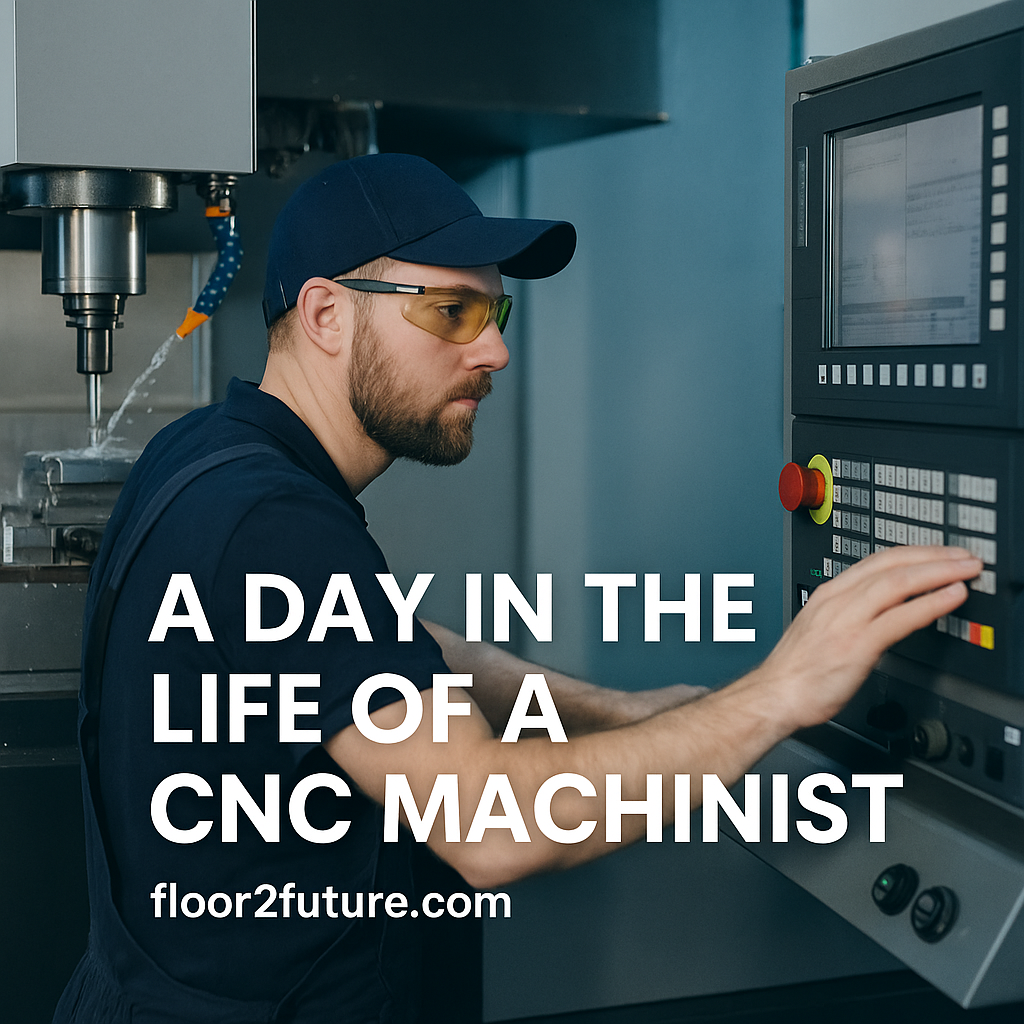
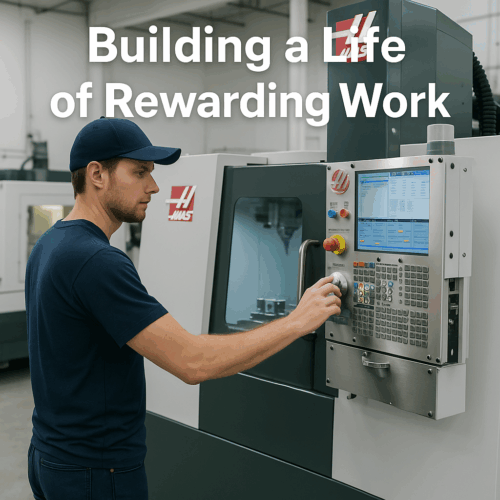
A Day in the Life of a CNC Machinist — And How Floor2Future.com Can Help You Start Your Career

Walk into any modern manufacturing facility today — automotive, aerospace, firearms, medical devices, or semiconductor technology — and you will find one role at the center of it all: the CNC machinist. These are the skilled professionals who turn raw material into precision components that power the machines, tools, and technologies our world depends on.

But what does a CNC machinist actually do each day?
What does the job feel like?
And more importantly — how can someone with zero experience build a future in this field?

The answer is simpler than most people think, and that’s where Floor2Future.com comes in. But first, let’s walk through a real day in the life of a CNC machinist.


The Start of the Shift: Precision Begins Before the Machine Turns On

Every day for a CNC machinist starts with preparation. Precision machining isn’t just about pressing buttons — it’s about planning and understanding the job ahead.

Most machinists begin their shift by:

  • Reviewing job travelers and work orders
  • Reading blueprints and technical drawings
  • Verifying tools, holders, and fixtures
  • Checking machine condition and safety features
  • Loading or reviewing CNC programs

Before the first cut is made, they already know:

  • What material they’re working with
  • What dimensions and tolerances are required
  • How many parts are due by end of shift
  • What the potential challenges are
  • Which tools will see the most wear

This level of preparation is what makes CNC machining professional craftsmanship rather than simple machine operation.

And here’s the exciting part:

➡️ Everything a machinist does in this stage can be taught — step by step, starting with free training at Floor2Future.com.
We help you understand the fundamentals, so when you walk into your first shop, you’re confident and ready.


Machine Setup: Where Skill Meets Hands-On Work

Once preparation is done, the machinist moves into setup — one of the most respected skills in the trade. Setup requires mechanical understanding, attention to detail, and problem-solving.

A typical setup might include:

  • Installing vises, chucks, or custom fixtures
  • Loading cutting tools into the turret, spindle, or tool magazine
  • Setting tool length offsets
  • Establishing part zero points and work offsets
  • Loading raw material
  • Dry-running the program to ensure safety

This is where machining becomes both art and science. A single mistake can scrap expensive parts, but a perfect setup means hours of smooth production.

And again, the path to learning this begins with:

➡️ Floor2Future.com’s beginner-friendly CNC entry training.
We help you understand the fundamentals of setup, tooling, offsets, and machine controls before you ever touch a real machine.

With the right training, these tasks are not hard — they become second nature.


Running Production: Monitoring, Adjusting, and Improving

As the machine starts cutting, the machinist becomes the guardian of the process.

Their responsibilities include:

  • Checking dimensions using precision tools
  • Listening for changes in machine behavior
  • Monitoring tool wear
  • Adjusting offsets
  • Inspecting surface finishes
  • Keeping an eye on coolant flow and chip buildup

Machinists quickly develop what many call a “machine sense.”
They can tell from sound, vibration, smell, and chip color if something is wrong long before alarms go off.

This is why machining is so much more than button-pushing — it’s skilled decision-making.

And all of this can be learned, practiced, and mastered with time.
➡️ Floor2Future.com trains you to understand machine behavior so you become valuable on day one.


Quality Checks: Precision Is the Whole Game

Machining is about accuracy — sometimes down to a few ten-thousandths of an inch. That’s why quality checks are a major part of a machinist’s day.

Common tasks include:

  • Measuring with micrometers, calipers, bore gauges, height gauges
  • Checking tolerances against print specs
  • Inspecting threads, chamfers, and surface finishes
  • Recording in-process inspection results

These checks not only ensure quality — they build pride in the work.
There is something incredibly satisfying about making a part with perfect dimensions.

Floor2Future.com teaches the basics of measurement tools, GD&T concepts, and inspection techniques so you enter the field already ahead of most beginners.


Problem Solving: The Machinist’s Superpower

No day is the same in CNC machining — and that’s why people love this career.

Machinists solve problems such as:

  • Why is the tool wearing prematurely?
  • Why is the part slightly oversized today?
  • Should we adjust feed rate or spindle speed?
  • Is the fixture allowing movement?
  • Does the program need a minor tweak?

These challenges make the job engaging and mentally stimulating. It’s hands-on, high-tech, and rewarding.

And as you grow, your value skyrockets.

➡️ Floor2Future.com continues training you even AFTER you’re placed in a job.
We offer advanced skills training — free for our workers — to build you into a top-tier machinist.


End of Shift: Resetting for Tomorrow

At the end of the day, machinists:

  • Clean the machine
  • Remove chips
  • Update production counts
  • Tag maintenance issues
  • Prepare materials for the next operator
  • Document any changes or issues

Machinists take pride in their machine because it’s their craft, their responsibility, and often their pathway to higher pay and leadership roles.


**So How Do You Get Into CNC Machining?

Floor2Future.com Makes It Possible — Starting Today**

Here’s the truth:

✔ You do not need experience
✔ You do not need a degree
✔ You do not need to be a math expert
✔ You do not need previous factory work

You need:

🔥 Motivation
🔥 Dependability
🔥 A strong work ethic
🔥 Willingness to learn

Floor2Future.com exists for one purpose:

To take everyday people and train them into high-income manufacturing professionals.

When you join our program:

  1. You start with free required training
    • Work ethic
    • Body language
    • Safety
    • Communication
    • Intro to CNC
    • Intro to GD&T
  2. You complete your initial courses — all free.
  3. We place you with one of our partner companies.
    These companies already know that Floor2Future talent is exceptional — trained, motivated, and reliable.
    That’s WHY they want our people.
  4. Once you start working, you get more free training.
    • CNC basics
    • G-code
    • Lean manufacturing
    • Leadership skills
    • Promotion readiness
  5. Within a few years, you can reach $75,000 — $100,000+ annually.
    Many machinists reach six figures with overtime or advancement.

Floor2Future literally means:

**From the manufacturing floor…

to the future of your career.**

And that future starts the moment you submit your information.

No resume?
No experience?
No problem.

Go to Floor2Future.com and take your first step.

Your future is waiting — and it’s more achievable than you think.

A New Path to Your Future: How Anyone Can Build a Six-Figure Career Through Floor2Future.com

For years, people have been told that the only way to achieve a great career is to spend years in college, take on debt, or already have special skills. But the truth is simpler — and more powerful — than that. The American manufacturing industry is exploding with new opportunities, and tens of thousands of high-paying jobs are going unfilled every single year. Not because the work is disappearing… but because companies can’t find enough dedicated, motivated people who want to learn.

That’s where you come in.
And that’s exactly where Floor2Future.com comes in.

Because right now, for the first time in decades, everyday people — people with no experience, no certifications, and no special background — are stepping into careers that pay $60,000, $80,000, even over $100,000 a year in just a few short years.

Not only is it possible… it’s happening every day. And it can happen for you, too.

The only thing you need is the willingness to learn, the drive to show up, and the commitment to become the kind of worker companies fight to keep.

Because the name Floor2Future has a purpose — it reflects the journey we help you take: from the manufacturing floor to the future of your career.
We don’t just help you get a job. We help you build a future, build skills, build stability, and build a life you can be proud of.


A Career You Can Build Without Experience — Starting Today

At Floor2Future.com, we believe every person deserves a real chance at a future they can be proud of — a future that supports your family, gives you stability, encourages growth, and creates opportunities you may have never imagined.

You don’t need a degree.
You don’t need years of experience.
You don’t even need to already be working in manufacturing.

What you DO need is simple:
The willingness to start and the desire to become someone exceptional.

We’ll take care of the rest.


We Train You Before You Ever Start Working

Unlike traditional staffing companies or training programs, we don’t wait until after you’re hired to develop you.
We invest in you from day one.

That means:

  • Free training before you start working
  • Free technical development while you’re on the job
  • Free leadership training if you want management opportunities
  • Free specialized skill development that makes you more valuable

You receive training BEFORE you ever step onto a manufacturing floor — In fact, there are a few trainings we require you to take in order for us to work toward placing you. so when you do walk in, you look like someone who already belongs there.

Companies notice that.
And it matters.


The Companies We Partner With Already Know You’re Different

This is one of the biggest advantages of joining Floor2Future.com.

The companies we work with know exactly what we’re building — a workforce made up of motivated, high-character individuals who have already completed real training before ever being hired.

They understand our process.
They understand our standards.
They understand that we develop people, not just place them.

And because these companies know you’ve completed training with Floor2Future.com, they already expect you to be:

  • Dependable
  • Trainable
  • Professional
  • Motivated
  • Work-ethic driven
  • Leadership-minded

This becomes a driving factor for why they want YOU.

Not just anyone — YOU.

Because you’re not coming in cold.
You’re coming in prepared.
You’re coming in with skills, discipline, and a program behind you.

Companies trust the people we train — and that trust gives you a competitive edge from day one.


You Complete Your Training — We Find the Job

Once you complete your initial training, we take the next step:
We go find the right job for you.

We will be partnering with major companies across:

  • Automotive
  • Aerospace
  • Defense
  • Semiconductor & chip manufacturing
  • Advanced machining
  • Modern assembly and automation

These companies are investing billions in new operations and need people like you — dedicated, driven, and ready to grow.

You won’t be sending out endless applications.
We bring the opportunities to you.


We Continue Training You — For Free — As You Work

Your career doesn’t end once you get hired — it begins there.

As you work, we continue developing you:

  • Technical training
  • Lean manufacturing skills
  • Quality & inspection
  • CNC basics
  • GD&T
  • Professional communication
  • Safety awareness
  • Leadership development

Every skill increases your earning potential.
Every bit of training adds value.
Every improvement moves your career forward.

Many people who follow this path earn over $100,000 a year within just a few years — starting with no experience. We take pride in what our team achieves. We may even be prouder of you that you will be!


We Are Building an Army of High-Value People

Floor2Future.com is more than training.
More than job placement.
More than a website.

We are building an army of people who want better lives — people like you.

High-character.
Hardworking.
Ambitious.
Reliable.
Driven.

People who want a future.

This is your chance to join that movement.


You Just Need a Way In — And We Work To Provide It

Whether you have a resume or not, you can start today.

✔ If you have a resume:

Submit it at Floor2Future.com and we’ll take it from there.

✔ If you don’t have one:

Just submit your information.
We’ll help you get started.

Your future doesn’t have to wait.
Your opportunity doesn’t have to wait.
Your next chapter starts when you do.


Your New Career Begins With One Decision

Right now, someone is working toward a six-figure manufacturing career…
Someone who started right where you are…
Someone who simply said yes to their future.

Now it’s your turn.

Visit Floor2Future.com, submit your information, and begin your free training today.

Because your journey starts on the manufacturing floor…
And your future begins the moment you decide to rise above it.

would you hire yourself?
Would You Hire Yourself? A Hard Look at Today’s Workforce and the Values That Matter

Walk into any workplace today, and you’ll hear the same concerns from employers, supervisors, and long-tenured workers: “People don’t want to work anymore.”
“Nobody shows up.”
“You can’t depend on anyone.”

But the truth is more complicated than that.
It’s not that people don’t want to work — it’s that many are struggling with habits and mindsets shaped by a world of instant gratification, constant notifications, and social media culture.

And before anyone points fingers outward, this article asks a deeper, more uncomfortable question:

Would you hire yourself?

That single question can reshape an entire career.


The Social Media Generation and the Rise of “Right Now” Thinking

We live in a world where everything is immediate:

  • Entertainment on demand
  • Likes and hearts within seconds
  • Same-day delivery
  • Search results in milliseconds
  • Viral videos overnight

The digital world has trained us to expect speed, convenience, and instant rewards.
But the working world — the real world — simply doesn’t operate that way.

A job requires patience.
Growth requires consistency.
Success requires sacrifice.
And most importantly, careers require showing up, over and over, even when the feelings aren’t there.

But many young workers today have been shaped by systems that reward the moment, not the mission.

That’s why we see:

  • Ghosting a job after one tough day
  • Quitting without notice
  • Not responding to calls from hiring managers
  • Walking off the line because something “felt off” that morning
  • Expecting a raise after two weeks
  • Expecting a promotion before proving reliability

It’s not because they’re bad people — it’s because the world they grew up in operates differently than the world of employment.

And that gap between expectation and reality is costing careers before they ever begin.


What We Want From Others — But Don’t Always Give

Everyone has standards for the people they allow in their life.

Think about what you value in your closest relationships:

  • Dependability
  • Honesty
  • Loyalty
  • Ethical behavior
  • Effort and follow-through
  • Respect
  • Consistency
  • Good communication

If your best friend only showed up when they felt like it, you wouldn’t trust them.
If your partner lied regularly, you wouldn’t tolerate it.
If your family disappeared for days with no explanation, you’d worry — or be hurt.
If someone made promises and never kept them, you’d stop relying on them.

We expect a lot from the people around us.

But here’s the uncomfortable question:

Are we giving those same qualities to the companies that invest in us?

Do we show up every day?
Do we communicate honestly?
Do we take ownership of our mistakes?
Do we put in consistent effort?
Do we follow through — even when we don’t feel like it?
Do we treat the company’s time the same way we expect others to treat ours?

Because if we demand loyalty, honesty, dependability, and strong values from the people in our life…

…we should demand the same from ourselves.


The Ghosting Problem: A Symptom of Something Bigger

Ghosting has become increasingly common — not just socially, but professionally.

Employers see:

  • People not showing up after accepting a job
  • New hires disappearing before orientation ends
  • Employees walking out on day one
  • Workers quitting by text message
  • People avoiding difficult conversations rather than facing them

But ghosting doesn’t solve anything.
It doesn’t build strength.
It doesn’t build character.
And it definitely doesn’t build a career.

In life, you face hard days.
In manufacturing, you face long shifts.
In any job, you face stress, challenges, and conflict.

Walking away every time something doesn’t feel good destroys long-term opportunity.

Success requires learning how to work through struggles — not running from them.


What Employers Actually Want

Most companies aren’t expecting perfection. They’re not even expecting advanced skills on day one.

They want something far simpler — the same things we want from our relationships:

1. Dependability

Show up.
Be on time.
Stay until the job is finished.

2. Honesty

Tell the truth.
Admit mistakes.
Take responsibility.

3. Work Ethic

Put in effort.
Don’t cut corners.
Avoid distractions.
Take pride in your work.

4. Attitude

Be coachable.
Be respectful.
Be someone people want on their team.

5. Consistency

Don’t be great one day and absent the next.
Small, repeatable actions build trust.

These qualities matter more than talent, more than skill, and more than experience.

Because skills can be taught.
Dependability cannot.


Would You Hire Yourself?

So let’s return to the big question:

If you were the employer, would you hire you?

Would you hire someone who:

  • Shows up on time 100% of the month?
  • Brings a positive attitude even when they’re tired?
  • Communicates with respect?
  • Doesn’t quit when things get uncomfortable?
  • Keeps their word?
  • Doesn’t ghost when life feels overwhelming?
  • Treats the job with pride and professionalism?

Or…

Would you hesitate to hire someone who:

  • Comes in late often
  • Leaves early
  • Disappears without notice
  • Takes more than they give
  • Avoids accountability
  • Scrolls instead of works
  • Complains more than they contributes

This question isn’t meant to judge — it’s meant to empower.

Because once you take ownership of who you are on the job, everything changes.

You stop blaming.
You stop justifying.
You stop comparing yourself to others.
And you start building the version of yourself that deserves the success you want.


Companies Invest in People Who Invest in Themselves

Companies don’t promote potential — they promote performance.

They don’t reward feelings — they reward habits.

They don’t value excuses — they value reliability.

If a company is willing to invest in you with:

  • A paycheck
  • Training
  • Benefits
  • Career pathways
  • Opportunities for advancement

…then the question becomes:

Are you giving them something worth investing in?

Because the employee who shows up consistently, communicates respectfully, works with integrity, and grows their skills will always rise faster than the employee who only tries when they feel motivated.


Your Future Starts With One Decision

Every person reading this has the ability to succeed.
Every person has the ability to grow.
Every person has the ability to become the kind of worker that employers fight to keep.

But it starts with a single honest question:

Would you hire yourself?

If the answer is “yes,” keep going — success is yours to claim.

If the answer is “not yet,” then make today the day you start becoming the version of yourself that deserves the future you want.

Because the truth is simple:

When you hold yourself to the same standards you expect from others, your life elevates — and your career follows.

the return of American manufacturing
Success Is Yours: The Return of American Manufacturing and the Workforce Rising With It

For generations, American manufacturing was one of the strongest pathways to a stable, successful, financially rewarding life. Millions of families built their futures on the wages earned from factory floors—reliable paychecks, affordable homes, solid benefits, and opportunities for advancement. Manufacturing didn’t just offer jobs; it created careers, stability, pride, and upward mobility.

People who showed up, worked hard, and learned their craft could climb into technical roles, leadership positions, or long-term careers with incredible security.

But as time went on, the landscape changed.


When Jobs Left Our Shores

Throughout the 1990s and early 2000s, U.S. manufacturing went through a deep decline. Companies offshored production to reduce labor costs, and millions of workers were displaced.

Those decades reshaped entire communities. Factories closed. Towns lost their economic anchors. Workers who once had lifelong careers suddenly faced uncertainty.

But today, the tide is turning.


A New Manufacturing Boom Is Taking Shape

America is experiencing one of the largest manufacturing build-outs in modern history.

This is not a small rebound—it is a transformation.

Here are the three biggest drivers.


1. Semiconductors: The New Industrial Engine

The CHIPS and Science Act has triggered a boom in semiconductor production:

Semiconductors are the backbone of modern technology—and the U.S. is rebuilding this entire ecosystem from the ground up.


2. Electric Vehicles, Batteries & Clean Energy

EVs and battery manufacturing are exploding across the U.S.:

States like Georgia, Indiana, and Michigan have become major hubs for EV and battery manufacturing.


3. Traditional Manufacturing Is Returning Too

Reshoring isn’t limited to high-tech sectors. Classic manufacturing is returning:

Companies want supply chains that are reliable, fast, and closer to their engineering teams—and that means rebuilding here in the U.S.


What This Means for You

The new American manufacturing surge is not just about innovation.
It’s about opportunity.

But the factories being built today are different. They require:

  • Lean thinking
  • Strong work ethic
  • Technical understanding
  • Precision
  • Leadership skills
  • CNC & GD&T knowledge
  • Communication and professionalism

Workers who bring these traits will rise faster than ever.

And that’s exactly where Floor2Future.com comes in.


How Floor2Future.com Is Helping Build America’s New Workforce

Floor2Future.com exists to prepare workers for the new era of manufacturing—an era that demands both skill and mindset.

Our mission is simple:

To help individuals go from the factory floor to the future of their career.

We are building training designed to equip workers for modern manufacturing roles:

  • Lean Manufacturing Specialist Certification
  • Introductory CNC Training
  • G-Code and M-Code Courses
  • Introductory and Advanced GD&T
  • Work Ethic Training
  • Body Language & Professional Conduct
  • Leadership and communication preparation

All of these programs are crafted to reflect real-world expectations from today’s fastest-growing plants—from semiconductor fabs to EV battery plants to reshoring manufacturing operations.

The factories coming online now will need the next generation of team leaders, operators, inspectors, technicians, and supervisors. And the ones who succeed will be those who combine strong skills with strong ethics and strong mindset.


The Future Is Opening Its Doors

Manufacturing is returning.
Opportunity is returning.
Financial stability is returning.

But success will belong to the people who prepare for the moment—those who understand that work ethic, initiative, and continuous improvement are still the most valuable skills on any factory floor.

Success is yours.
And Floor2Future.com is here to help you reach it.

good manufacturing jobs.
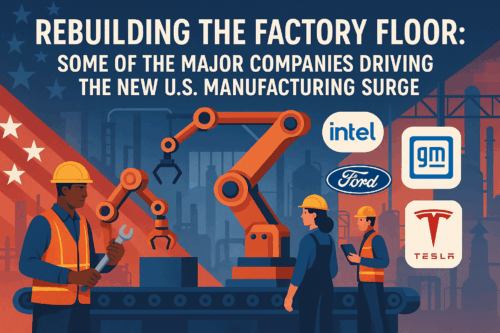
Rebuilding the Factory Floor: Some of the Major Companies Driving the New U.S. Manufacturing Surge!

    Short version: there is a ton of new money and jobs pouring into U.S. manufacturing right now—especially chips, EVs/batteries, and clean energy—but it’s uneven and still fighting against long-term job losses.

    1. The big picture: a manufacturing build-out

    • Between January and September 2025, companies announced over $1.2 trillion in investments to build out U.S. production capacity, led by electronics, pharmaceuticals, and semiconductors.
    • Factory construction spending has exploded: over the last year the U.S. has spent about $228 billion on manufacturing plants, with monthly spending running around $19 billion—up 219% from early 2021. Wolf Street+1
    • Reshoring + foreign direct investment (FDI) projects accounted for 244,000 announced manufacturing jobs in 2024 alone, with momentum still strong in early 2025. Reshoring Now

    So even though manufacturing employment is still below its late-1970s peak (the U.S. has lost about 6.6 million factory jobs since 1979), there’s clearly a new wave of plants and equipment going in. Federal Reserve Bank of Cleveland


    2. Semiconductors: CHIPS Act and the “fab boom”

    The biggest single story is chips.

    • As of mid-2025, companies have announced over $500 billion in private-sector commitments to build out the U.S. chip ecosystem, with the goal of tripling domestic capacity by 2032. Deloitte
    • The Semiconductor Industry Association estimates these projects will create/support 500,000+ U.S. jobs:
    • The lion’s share of CHIPS Act grants so far has gone to Intel, TSMC, Samsung, and Micron, tied to new fabs that are expected to add 30,000+ high-paying manufacturing jobs plus roughly 100,000 more construction and supplier jobs. LSA Technology Services+1

    On top of front-end fabs, you’ve now got Amkor building a massive advanced packaging campus in Peoria, Arizona—up to $7 billion investment and 3,000 jobs at full build-out, packaging chips for Apple and others. Tom’s Hardware

    For workers, that means demand not just for operators, but also:

    • Equipment and maintenance technicians
    • Process and quality techs
    • Facilities, utilities, and EHS roles
    • A big ring of construction and supplier jobs around the fabs

    3. EVs, batteries, and clean energy manufacturing

    The second big bucket is EV and clean-energy manufacturing, mostly boosted by the Inflation Reduction Act.

    • Over the last nine years, companies have announced $199 billion in U.S. EV and EV-battery investments, with 201,900 EV-related jobs already announced and the potential for up to 931,000 total jobs when you include the wider economy. Environmental Defense Fund+1
    • Hyundai + SK On and LG Energy Solution: two big EV/battery complexes in Georgia—near Atlanta and Savannah—totaling roughly $8–9 billion plus another $2 billion expansion, projected to create around 6,500 jobs. Climate Power
    • Stellantis + Samsung SDI (StarPlus Energy): two EV battery factories in Kokomo, Indiana, backed by a $7.54 billion federal loan, expected to create roughly 3,200 jobs. The Verge
    • A recent fact sheet on clean-energy manufacturing shows that August 2025 alone saw $2.4 billion in new clean-energy manufacturing investments and 3,700 new manufacturing jobs announced. Atlas Policy

    There is some turbulence—GM, for example, is cutting about 1,700 EV-related jobs and pausing some battery lines because demand isn’t ramping as fast as expected. Reuters+1
    But the overall trend is still a long pipeline of EV, battery, and component plants coming online over the next several years.

    On the ground, that means jobs for:

    • Battery and cell production operators
    • Assembly and testing techs
    • Automation/robotics maintenance
    • Materials handling and logistics

    4. Reshoring, appliances, and other “everyday” manufacturing

    It’s not just chips and EVs. A lot of traditional manufacturing is coming back or expanding as companies try to shorten supply chains and dodge tariffs.

    • A reshoring report finds that companies’ top reasons for bringing work back are:
      • Keeping manufacturing closer to engineering (45%)
      • Cutting freight and duty (45%)
      • Avoiding geopolitical risk (38%)
      • Staying close to customer markets (35%). AMT
    • GE Appliances (owned by Haier) just announced a $150 million investment in 22 U.S. suppliers across 10 states as part of a reshoring push. That’s tied into a broader $3 billion, five-year plan to modernize U.S. operations and expand a renovated Louisville, KY factory that will build new washer/washer-dryer lines starting in 2027. Suppliers are expanding plants, hiring staff, and buying new equipment to support this. Wall Street Journal
    • A reshoring analysis highlights four big players:
      • Newell Brands shifting consumer-goods manufacturing
      • Amkor (the AZ campus above)
      • Hyundai (EV and battery plants in Georgia)
      • Eli Lilly, which is pouring billions into new U.S. pharma manufacturing capacity. Tema ETFs
    • A White House investment roundup mentions Pratt Industries committing $5 billion to new paper/packaging plants, tied to 5,000 manufacturing jobs across Ohio, Michigan, Pennsylvania, and Arizona. The White House

    These projects create lots of the kinds of roles you care about in your own trainings:

    • Line operators and assemblers
    • Maintenance and toolroom roles
    • Quality inspectors and techs
    • Supervisors and production leads

    Exactly the types of people who can benefit from Lean / work-ethic / CNC / GD&T training.


    5. What this means for jobs and skills

    Putting the pieces together:

    • Capital is definitely coming back to U.S. manufacturing.
      Huge numbers like $1.2T in planned production investment and $228B/year in factory construction aren’t small moves. Global X ETFs+1
    • Job counts are big, but they’re “distributed” across construction, suppliers, and high-skill roles—not just straightforward line jobs.
    • Semiconductors + EV/batteries + clean energy are the big headline sectors, but reshoring in “boring” stuff (appliances, packaging, pharma, components) is quietly adding tens of thousands of jobs too. Reshoring Now+1
    • Skill bar is going up. A lot of these plants are highly automated. That makes foundational skills like:
      • Lean thinking and waste reduction
      • Strong work ethic and reliability
      • Basic CNC / mechatronics / GD&T
        even more valuable, because fewer people run more equipment.

    With the Floor2Future / Lean-Manufacturing-Specialist certification, you’re basically building training right in the middle of a multi-year build-out. Companies are going to need operators and front-line leaders who can step into these plants and actually keep them running efficiently. Floor2Future.com has its sights on being the doorway to this new era of manufacturing. We will be as dynamic as the industry needs us to be.

    Why 6S Can Power Your Career and Your Company — No Matter the Size

    In today’s fast-paced world, businesses are constantly searching for ways to improve efficiency, reduce waste, and boost safety. But what if one method could do all three—and more? That’s where 6S comes in. Originally born in manufacturing, 6S has grown into a universal system for creating clean, organized, and productive workspaces in every industry.

    And here’s the real secret: understanding how to implement 6S doesn’t just help your company—it can fast-track your career. Whether you’re just entering the workforce or aiming to move up, knowing how to use tools like 6S can make you stand out and bring real value to any team.

    Let’s break down what 6S is, how it applies to every industry, and how learning it through platforms like Floor2Future.com can help you grow—professionally and personally.


    What Is 6S?

    6S is a proven workplace organization method that stands for:

    1. Sort – Remove what you don’t need. Keep only the essentials.
    2. Set in Order – Organize tools and materials for easy access.
    3. Shine – Clean the space regularly and keep it that way.
    4. Standardize – Make those habits part of daily work through checklists and shared practices.
    5. Sustain – Turn good habits into lasting systems through accountability.
    6. Safety – Make safety a built-in part of the process to prevent injuries and protect workers.

    What makes 6S so effective is its simplicity. It’s not a one-time fix—it’s a culture shift that creates cleaner, safer, and more productive work environments.


    Why It Works in Any Industry

    You don’t have to work in a factory to benefit from 6S. Offices, warehouses, kitchens, hospitals, retail stores, and even remote teams all deal with clutter, inefficiency, and disorganization. Wherever people work, 6S adds structure.

    For example:

    • In offices, it can streamline files, reduce digital clutter, and improve time management.
    • In healthcare, it boosts patient safety by organizing tools and eliminating confusion.
    • In retail, it improves product flow and prevents lost inventory.

    6S eliminates the chaos that slows down progress. It gives workers clearer paths to follow, faster access to what they need, and fewer distractions—all of which lead to better outcomes.


    Why Learning 6S Accelerates Your Career

    Here’s the exciting part: knowing how to implement 6S makes you more valuable—wherever you work.

    Employers value people who solve problems, improve processes, and make the workplace more efficient. By learning 6S:

    • You prove you’re organized and forward-thinking.
    • You stand out as someone who understands operational flow—not just your individual tasks.
    • You become a go-to resource when it’s time to train others, manage teams, or lead improvement initiatives.

    In short: 6S builds more than clean spaces. It builds careers.


    Floor2Future.com: Your Gateway to 6S and More

    At Floor2Future.com, we believe that skills like 6S shouldn’t be gatekept. That’s why we offer practical, accessible training on tools that make a real difference—at work and in life.

    In today’s fast-paced world, businesses are constantly searching for ways to improve efficiency, reduce waste, and boost safety. But what if one method could do all three—and more? That’s where 6S comes in. Originally born in manufacturing, 6S has grown into a universal system for creating clean, organized, and productive workspaces in every industry.

    And here’s the real secret: understanding how to implement 6S doesn’t just help your company—it can fast-track your career. Whether you’re just entering the workforce or aiming to move up, knowing how to use tools like 6S can make you stand out and bring real value to any team.

    Let’s break down what 6S is, how it applies to every industry, and how learning it through platforms like Floor2Future.com can help you grow—professionally and personally.


    What Is 6S?

    6S is a proven workplace organization method that stands for:

    1. Sort – Remove what you don’t need. Keep only the essentials.
    2. Set in Order – Organize tools and materials for easy access.
    3. Shine – Clean the space regularly and keep it that way.
    4. Standardize – Make those habits part of daily work through checklists and shared practices.
    5. Sustain – Turn good habits into lasting systems through accountability.
    6. Safety – Make safety a built-in part of the process to prevent injuries and protect workers.

    What makes 6S so effective is its simplicity. It’s not a one-time fix—it’s a culture shift that creates cleaner, safer, and more productive work environments.


    Why It Works in Any Industry

    You don’t have to work in a factory to benefit from 6S. Offices, warehouses, kitchens, hospitals, retail stores, and even remote teams all deal with clutter, inefficiency, and disorganization. Wherever people work, 6S adds structure.

    For example:

    • In offices, it can streamline files, reduce digital clutter, and improve time management.
    • In healthcare, it boosts patient safety by organizing tools and eliminating confusion.
    • In retail, it improves product flow and prevents lost inventory.

    6S eliminates the chaos that slows down progress. It gives workers clearer paths to follow, faster access to what they need, and fewer distractions—all of which lead to better outcomes.


    Why Learning 6S Accelerates Your Career

    Here’s the exciting part: knowing how to implement 6S makes you more valuable—wherever you work.

    Employers value people who solve problems, improve processes, and make the workplace more efficient. By learning 6S:

    • You prove you’re organized and forward-thinking.
    • You stand out as someone who understands operational flow—not just your individual tasks.
    • You become a go-to resource when it’s time to train others, manage teams, or lead improvement initiatives.

    In short: 6S builds more than clean spaces. It builds careers.


    Floor2Future.com: Your Gateway to 6S and More

    At Floor2Future.com, we believe that skills like 6S shouldn’t be gatekept. That’s why we offer practical, accessible training on tools that make a real difference—at work and in life.

    Our 6S course teaches you what it is, how to apply it, and how to introduce it into your current (or future) workplace. And this is just the beginning. Our training library is growing—just like you. As we expand, you’ll gain access to new skills, new

    The 1%, the 100%, and the Path to Real Success: How Manufacturing Fuels a Life of Compounding Rewards

    In a world that often highlights quick fame, it’s easy to get caught up in dreams that rarely come true. The influencer path promises instant recognition, but less than 1% truly achieve lasting success. Instead of chasing that mirage, there’s a more certain, fulfilling path that combines the steady power of compounding efforts with the stability of meaningful work: the world of manufacturing.


    The Influencer Mirage vs. the Power of Compounding

    Let’s start by acknowledging that the influencer route is a long shot for most. While the allure of instant fame is strong, the reality is that fewer than 1% can sustain a full-time living this way. It’s a path filled with uncertainty, leaving many people chasing trends rather than building a future.

    Now, think about life as a journey of compounding efforts. Compound interest isn’t just a financial concept; it’s a way of life. The small, consistent choices you make—saving a little each month, learning new skills, showing up every day—compound over years to create a stable, abundant future. This isn’t about quick wins; it’s about building lasting success through steady, intentional effort.


    Manufacturing: The Engine That Fuels Your Compounding Success

    So how do you fund this life of compounding rewards? This is where manufacturing shines as a reliable, empowering path. Unlike the uncertainty of influencer fame, manufacturing offers stable, well-paying jobs where a strong work ethic is the key to advancement. It’s a field where you can start without a degree, learn on the job, and quickly earn a solid income.

    With that stable income, you’re not just making ends meet—you’re fueling your future. You can invest in yourself, save consistently, and let those investments grow. Over time, the money you save and the skills you gain compound, creating a life of real security and opportunity.


    Conclusion: From the Factory Floor to Financial Freedom

    In the end, the path to success doesn’t lie in chasing fleeting dreams. It lies in embracing the steady, compounding power of consistent effort and reliable work. Manufacturing offers a proven, positive path where your dedication pays off, your income grows, and your future flourishes.

    So skip the mirage and choose the path that lets you build a life of compounding success. With manufacturing as your foundation, the future is truly in your hands.

    Reclaiming the Work Ethic: How Manufacturing Rewards Hard Work—No Degree Needed

    In an era where digital fame and quick wins seem to dominate the headlines, there’s a quieter but steadfast narrative: the enduring value of a strong work ethic in manufacturing. This is a field where you don’t need a fancy degree to start. In fact, the education you need begins the moment you walk onto the shop floor. It’s a story of real opportunities and real rewards—built on dedication rather than diplomas.

    The Timeless Power of Hard Work

    For decades, manufacturing has offered a clear and accessible path to a stable career. Unlike many fields that demand years of formal education, manufacturing welcomes those who are ready to learn on the job. The moment you step into a factory, you start gaining the practical knowledge that turns you into a skilled specialist.

    This model isn’t new, but it’s as relevant as ever. In a world where the cost of higher education can be a barrier, manufacturing provides a different gateway. It says, “Show up, be reliable, and we’ll teach you everything you need to know.” The emphasis is on your willingness to work and learn, not on the credentials you bring with you.

    A Steady Path in an Uncertain World

    In today’s economy, many people are enticed by the idea of instant success. We hear stories of influencers and tech entrepreneurs who make it big overnight. But these stories, while inspiring, represent a tiny fraction of reality. For the vast majority, stable success comes from fields that offer reliability and a clear progression path.

    Manufacturing is one of those fields. It doesn’t promise instant fame, but it does promise a solid paycheck and job security. And unlike many careers that require expensive degrees, manufacturing lets you earn while you learn. The training you receive on the job is often all you need to advance.

    The Real Rewards of Effort

    What’s the payoff for this effort? It’s real and tangible. With a steady job in manufacturing, you can achieve many of the traditional markers of success: a comfortable home, a healthy savings account, and the ability to provide for your family. It’s a path paved with reliability, where hard work is rewarded with real, lasting benefits.

    Moreover, there’s the compound interest of time. The longer you stay in the field, the more your skills, experience, and earnings grow. This isn’t just about collecting a paycheck; it’s about building a future. Over time, you can move up the ranks, take on more responsibility, and increase your earning potential. And as you save and invest, you benefit from the steady growth that comes from long-term commitment.

    Conclusion: A Roadmap to Real Success

    In conclusion, the story of manufacturing is one of opportunity grounded in reality. It doesn’t rely on luck or viral fame. Instead, it offers a clear, stable path to success for those willing to put in the work. No degree is needed—just a willingness to learn, a commitment to show up, and a dedication to doing the job well.

    While the world changes around us, the value of a strong work ethic in manufacturing remains as powerful as ever. It’s a roadmap that has stood the test of time, offering real, lasting rewards to those who embrace it. In a world full of uncertainties, manufacturing remains a dependable and rewarding path to real success.

    Rebuilding Work Ethic in Manufacturing: A Call for Revival and Growth

    In a time when innovation is transforming the manufacturing industry, one thing we can’t afford to lose is the cornerstone of industrial success: work ethic. Over the past few decades, we’ve witnessed a noticeable shift in how work is perceived—not just in manufacturing, but across nearly every sector. However, the manufacturing industry, which built much of the global economy through grit, dedication, and pride in a job well done, is especially vulnerable to the consequences of a fading work ethic.

    Today, manufacturers face a dual challenge: evolving with modern technology while confronting a workforce that often lacks the drive and discipline that once defined the industry. This isn’t just about “hard work” for hard work’s sake—it’s about restoring a culture that values commitment, craftsmanship, and long-term growth. Because the truth is, manufacturing remains one of the few industries where someone can start with little and build a meaningful, high-paying career. But only if we’re willing to bring work ethic back into focus.


    The Changing Face of Manufacturing

    Let’s be clear: manufacturing is not the same industry it was 50—or even 20—years ago. Automation, robotics, and data-driven systems have streamlined many aspects of the job. The work is cleaner, safer, and often more intellectually stimulating. However, with that progress has come a perception problem: younger generations are frequently told that manufacturing is a last resort, a fallback, or “too hard” to be worth pursuing.

    That mindset needs to change. Manufacturing isn’t just about machines and labor—it’s about solving problems, building things that matter, and contributing to an economy that still relies heavily on physical products. Yet this message is getting lost amid a culture that increasingly devalues perseverance and patience.


    Where Has the Work Ethic Gone?

    Much of today’s workforce enters the field expecting fast results, minimal effort, and constant recognition. And while ambition is valuable, it must be paired with endurance. Manufacturing has always rewarded those willing to learn, show up consistently, and take pride in their output.

    A strong work ethic means doing your job to the best of your ability even when no one is watching. It means caring about quality, respecting the process, and understanding that mastery takes time. Somewhere along the line, this foundational principle became optional for too many—and the industry is paying the price.

    High turnover rates, disengagement, and a widening skills gap aren’t just the result of technological disruption—they’re a reflection of a culture that no longer teaches the value of hard, honest work. If we want to preserve manufacturing’s future, we must revive this mindset from the ground up.


    A Path to Advancement and Financial Independence

    What’s often overlooked is that manufacturing still offers real, tangible opportunities for advancement—often without the burden of a four-year degree. Entry-level workers can rise through the ranks to become team leads, engineers, supervisors, or even plant managers. Many companies offer on-the-job training, certifications, apprenticeships, and tuition reimbursement to help motivated employees climb the ladder.

    And the financial rewards are real. Skilled tradespeople, machine operators, and automation technicians can make six-figure salaries with the right experience. Yet many of these roles remain unfilled because too few people are willing to commit to the process of learning and growing within the trade.

    This is a call to reframe the narrative. Manufacturing isn’t a fallback—it’s a launchpad. For those willing to work, the industry offers financial security, personal pride, and a sense of purpose that’s hard to find elsewhere.


    Bringing Work Ethic Back

    To rebuild work ethic in manufacturing, we must do more than complain about “kids these days.” Employers need to lead by example—fostering a culture that rewards effort, recognizes reliability, and invests in career development. Schools, trade programs, and parents must also play a role in showing young people the dignity and opportunity that exist in the trades.

    More importantly, individuals must take ownership. The mindset that “it’s just a job” must be replaced with the idea that “this is a stepping stone.” Show up on time. Take pride in your work. Learn from those who came before you. And most importantly, understand that every shift, every task, and every challenge is building something bigger than just a paycheck—it’s building your future.


    In Conclusion

    The manufacturing industry is at a crossroads. Technology is reshaping what we do, but human work ethic still determines how well we do it. By reviving the values of dedication, accountability, and pride in our work, we can not only bridge the skills gap—but elevate an entire generation of workers toward advancement and financial freedom. Manufacturing is still one of the greatest engines of opportunity. It’s time we remind people what’s possible—when they’re willing to earn it.