
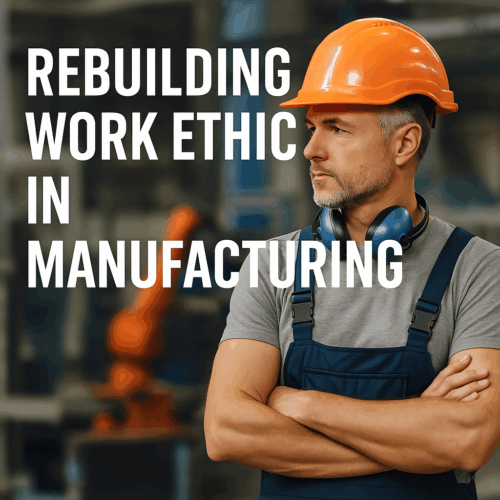
Rebuilding Work Ethic in Manufacturing: A Call for Revival and Growth
In a time when innovation is transforming the manufacturing industry, one thing we can’t afford to lose is the cornerstone of industrial success: work ethic. Over the past few decades, we’ve witnessed a noticeable shift in how work is perceived—not just in manufacturing, but across nearly every sector. However, the manufacturing industry, which built much of the global economy through grit, dedication, and pride in a job well done, is especially vulnerable to the consequences of a fading work ethic.
Today, manufacturers face a dual challenge: evolving with modern technology while confronting a workforce that often lacks the drive and discipline that once defined the industry. This isn’t just about “hard work” for hard work’s sake—it’s about restoring a culture that values commitment, craftsmanship, and long-term growth. Because the truth is, manufacturing remains one of the few industries where someone can start with little and build a meaningful, high-paying career. But only if we’re willing to bring work ethic back into focus.
The Changing Face of Manufacturing
Let’s be clear: manufacturing is not the same industry it was 50—or even 20—years ago. Automation, robotics, and data-driven systems have streamlined many aspects of the job. The work is cleaner, safer, and often more intellectually stimulating. However, with that progress has come a perception problem: younger generations are frequently told that manufacturing is a last resort, a fallback, or “too hard” to be worth pursuing.
That mindset needs to change. Manufacturing isn’t just about machines and labor—it’s about solving problems, building things that matter, and contributing to an economy that still relies heavily on physical products. Yet this message is getting lost amid a culture that increasingly devalues perseverance and patience.
Where Has the Work Ethic Gone?
Much of today’s workforce enters the field expecting fast results, minimal effort, and constant recognition. And while ambition is valuable, it must be paired with endurance. Manufacturing has always rewarded those willing to learn, show up consistently, and take pride in their output.
A strong work ethic means doing your job to the best of your ability even when no one is watching. It means caring about quality, respecting the process, and understanding that mastery takes time. Somewhere along the line, this foundational principle became optional for too many—and the industry is paying the price.
High turnover rates, disengagement, and a widening skills gap aren’t just the result of technological disruption—they’re a reflection of a culture that no longer teaches the value of hard, honest work. If we want to preserve manufacturing’s future, we must revive this mindset from the ground up.
A Path to Advancement and Financial Independence
What’s often overlooked is that manufacturing still offers real, tangible opportunities for advancement—often without the burden of a four-year degree. Entry-level workers can rise through the ranks to become team leads, engineers, supervisors, or even plant managers. Many companies offer on-the-job training, certifications, apprenticeships, and tuition reimbursement to help motivated employees climb the ladder.
And the financial rewards are real. Skilled tradespeople, machine operators, and automation technicians can make six-figure salaries with the right experience. Yet many of these roles remain unfilled because too few people are willing to commit to the process of learning and growing within the trade.
This is a call to reframe the narrative. Manufacturing isn’t a fallback—it’s a launchpad. For those willing to work, the industry offers financial security, personal pride, and a sense of purpose that’s hard to find elsewhere.
Bringing Work Ethic Back
To rebuild work ethic in manufacturing, we must do more than complain about “kids these days.” Employers need to lead by example—fostering a culture that rewards effort, recognizes reliability, and invests in career development. Schools, trade programs, and parents must also play a role in showing young people the dignity and opportunity that exist in the trades.
More importantly, individuals must take ownership. The mindset that “it’s just a job” must be replaced with the idea that “this is a stepping stone.” Show up on time. Take pride in your work. Learn from those who came before you. And most importantly, understand that every shift, every task, and every challenge is building something bigger than just a paycheck—it’s building your future.
In Conclusion
The manufacturing industry is at a crossroads. Technology is reshaping what we do, but human work ethic still determines how well we do it. By reviving the values of dedication, accountability, and pride in our work, we can not only bridge the skills gap—but elevate an entire generation of workers toward advancement and financial freedom. Manufacturing is still one of the greatest engines of opportunity. It’s time we remind people what’s possible—when they’re willing to earn it.