Search for:
best project management system
Why Task27 Is a Strategic Expansion of the Floor2Future Ecosystem

At Floor2Future.com, we have never viewed recruiting, training, and leadership development as isolated services.

They are systems.

And systems require structure.

That’s why we are expanding our digital ecosystem with the integration of Task27, our premier project management platform designed to strengthen execution across recruiting, training, operational improvement, and upcoming franchise territories.

This is not about adding software.

It’s about reinforcing infrastructure.


From Services to Systems

Floor2Future was built around one core belief:

Impacting companies and careers requires structure, accountability, and disciplined execution.

We help companies:

  • Recruit the right people
  • Train them effectively
  • Develop strong leaders
  • Improve operational performance

But delivering these services at scale demands more than expertise. It demands coordination.

Task27 provides that coordination.

Instead of relying on disconnected tools, scattered emails, or spreadsheet tracking, Task27 centralizes:

  • Project workflows
  • Recruiting milestones
  • Training rollouts
  • Leadership initiatives
  • Client engagements

Everything moves through one organized system.


Why Project Management Matters in Workforce Development

Recruiting is not just interviews.

Training is not just content.

Leadership development is not just instruction.

Each of these requires timelines, accountability, communication, and measurable execution.

Task27 gives Floor2Future the ability to:

  • Track recruiting pipelines with structure
  • Coordinate onboarding programs
  • Manage custom training deployments
  • Monitor leadership implementation plans
  • Maintain visibility across teams

This ensures clients experience consistency, not chaos.


A Franchise-Ready Foundation

As Floor2Future prepares for upcoming franchise availability, systemization becomes critical.

Franchise growth only works when processes are standardized.

Task27 serves as the operational backbone for future franchise partners by providing:

  • Defined workflows
  • Clear task ownership
  • Transparent communication
  • Measurable accountability
  • Unified operational standards

Rather than each territory improvising its own systems, franchise owners will operate within a structured, proven framework.

That structure protects brand integrity and increases the likelihood of long-term success.


Discipline Over Noise

The market is crowded with enterprise software that promises everything.

Task27 focuses on execution.

It is clean.
It is practical.
It is built for accountability.

It reinforces our philosophy that operational clarity beats complexity.


Building for Long-Term Impact

Floor2Future is expanding intentionally.

Recruiting.
Training.
Leadership development.
Operational improvement.

Now strengthened by structured project management infrastructure.

Task27 represents the next step in building a scalable ecosystem capable of impacting companies and careers at a national level.

As we move toward franchise expansion, this investment in digital systems ensures that growth will be disciplined, measurable, and aligned with our mission.

The future of workforce development is not fragmented.

It is structured.

And Task27 is part of that foundation.

Why Modern Manufacturing Needs a Bottom-Up Workforce Model

Modern manufacturing is in the middle of a paradox. Investment is rising, technology is accelerating, and the need for skilled production talent has never been higher—yet many manufacturers still struggle to fill roles, stabilize teams, and build a pipeline that lasts.

The reason isn’t mysterious. The “skills gap” is real, but it’s not just about CNC, PLCs, metrology, or blueprint reading. It’s also about retention, expectations, leadership depth, and whether workers see a future in the work—or just another short stop on the road to somewhere else.

That’s the backdrop for Floor2Future.com: a platform designed to strengthen manufacturing from the ground up by developing stronger contributors, building better team leads, and creating clearer career pathways that benefit both people and companies.

The Pressure Is Rising: Open Roles and a Shrinking Pipeline

Manufacturers across the U.S. are facing a widening workforce shortfall. The National Association of Manufacturers has highlighted that the U.S. could face a shortfall of 1.9 million manufacturing workers by 2033, with 3.8 million positions expected to open and nearly half potentially going unfilled—despite manufacturing offering strong total compensation.

That statistic matters because it reframes the conversation. This isn’t a “recruiting problem” solved by posting more jobs. It’s a structural pipeline issue involving retirements, growth, competition for talent, and the increasing complexity of manufacturing work.

At the same time, technology is changing what “qualified” even means. Automation, advanced inspection, digital work instructions, and data-driven process control are elevating expectations at the operator level. Hiring managers increasingly need candidates who can learn quickly, adapt, communicate, and take ownership—not just show up.

The Skills Gap Is Also a Mindset and Leadership Gap

One of the biggest misconceptions in workforce development is that the gap can be solved by technical training alone. A credential helps—but it doesn’t automatically create reliability, judgment, communication, or pride in workmanship.

Multiple credible sources point to this broader shift in skill requirements. A World Economic Forum theme across its workforce work is that a large portion of skills are expected to change over a short time horizon; Deloitte’s workforce analysis cites the WEF’s findings that substantial skill requirements will evolve as advanced manufacturing transforms.

In plain terms: even if you train someone today, the job they do two years from now may require a different mix of technical ability, digital comfort, and soft skills. That means the workforce solution must be designed for ongoing development, not one-and-done orientation.

Why Retention Breaks the System (Even When Hiring “Works”)

Let’s say a company does manage to hire. If turnover stays high, the system never stabilizes:

  • Training becomes constant re-training
  • tribal knowledge leaks out the door
  • quality suffers under churn
  • supervisors spend their time “patching holes” instead of improving process
  • top performers burn out from carrying the load

This is why workforce development has to connect directly to daily behaviors: accountability, attendance, standard work discipline, problem escalation, and teamwork. If those fundamentals don’t improve, the revolving door wins—no matter how many ads you run.

Even manufacturer sentiment surveys reflect how persistent workforce difficulty remains as a business constraint. The National Association of Manufacturers Manufacturers’ Outlook Survey has consistently tracked workforce attraction and retention as a major concern for manufacturers in recent years.

The “Bottom-Up” Solution: Start Where the Work Happens

Manufacturing performance is ultimately created at the point of execution: the cell, the line, the machine, the inspection bench, the material flow lane. Yet most workforce strategies overemphasize top-down elements (policies, compensation structures, job postings) and underemphasize the bottom-up drivers (skill-building, pride, leadership habits, and shop-floor communication).

A bottom-up workforce model focuses on:

  1. Operator readiness as a core business lever
    Not just “filled seats,” but people who can meet the moment: safe work, consistent output, quality awareness, and continuous improvement participation.
  2. Clear expectations and personal standards
    Many failures are expectation failures. A bottom-up approach makes success requirements obvious early—before bad habits become culture.
  3. Leadership development at the first rung
    Companies promote their best technical people into lead roles and hope it works out. Often, they don’t get the structure or coaching needed to lead consistently. Building strong team leads is one of the highest-leverage moves a plant can make.
  4. Career pathways that feel real
    When employees can see the ladder—and believe it’s attainable—they stay longer, learn faster, and contribute more. The alternative is “job hopping” as the default path to pay growth.

Where Floor2Future Fits: Workforce Development That Serves Both Sides

Floor2Future.com is built to align incentives for both workers and manufacturers:

  • For workers: a clearer path from entry-level to advanced responsibility, plus development in the skills that actually unlock promotions—reliability, communication, leadership behavior, and continuous improvement thinking.
  • For companies: a pipeline of candidates who are more prepared for real production environments, and a framework that supports retention and stability—not just hiring volume.

This is also where the model departs from traditional recruiting. Recruiting is often transactional: fill the job, move on. Workforce development is compounding: when you build capability and culture, performance improves month after month.

Digital Real Estate That Supports the Mission

A strong workforce model needs infrastructure—places where people can enter the ecosystem, learn what’s expected, and connect with opportunities. That’s one reason Road2Jobs.com exists: as a focused platform supporting manufacturing roles while reinforcing the broader goal of improving readiness and fit, not just “applications per posting.”

Digital real estate matters because attention is fragmented. Workers search across multiple platforms; employers do the same. Owning a purpose-built entry point makes it possible to build consistency—consistent messaging, consistent expectations, consistent development pathways.

The Big Opportunity: Rebuilding Trust Between Employers and Workers

If you zoom out, the manufacturing workforce challenge is partly a trust challenge.

  • Employers worry about attendance, engagement, and dependability.
  • Workers worry about instability, burnout, and lack of growth.

A bottom-up approach rebuilds trust through performance and clarity:

  • workers know what great looks like and how to earn more responsibility
  • employers get people who understand the job and take pride in execution
  • leadership becomes more consistent and less reactive

That’s how you improve the “landscape” of modern manufacturing—not with hype, but with systems that make success more likely.

Where This Goes Next

The manufacturers who win the next decade won’t just buy better machines. They’ll build better people systems—where capability grows, leadership is trained, and shop-floor execution becomes a competitive advantage.

That’s the aim of Floor2Future: to help create manufacturing careers that last, and manufacturing businesses that can scale without being held hostage by turnover and talent shortages.

If you’re a manufacturer trying to stabilize performance—or a worker looking to build a real career path—Floor2Future is designed to be a practical bridge between today’s needs and the future you’re trying to reach.

Road2Jobs.com: Building a Stronger Pathway Into Modern Manufacturing

The manufacturing industry is evolving faster than ever—driven by technology, automation, and shifting workforce expectations. Yet one critical area continues to lag behind: how people enter, navigate, and grow within manufacturing careers. At Floor2Future.com, we believe that solving this challenge requires more than traditional recruiting or job postings. It requires a connected ecosystem built around preparation, expectations, and long-term success.

That belief is what led to the creation of Road2Jobs.com.

The Floor2Future Model: More Than Placement

Floor2Future.com was built on a simple but often overlooked principle: strong manufacturing companies are built by developing people, not just filling positions. Our model integrates workforce development, training, and career-long support to help individuals become reliable contributors and future leaders—while helping manufacturers reduce turnover, improve performance, and build stability.

Rather than operating as a traditional recruiting firm, Floor2Future focuses on alignment. We work to ensure individuals understand what modern manufacturing demands, and that companies receive candidates who are motivated to build careers, not just collect paychecks.

Road2Jobs.com exists as a critical extension of that model.

What Road2Jobs.com Is Designed to Do

Road2Jobs.com is a workforce-focused digital platform dedicated specifically to manufacturing roles. It is not a generic job board. It is purpose-built to improve how people connect with manufacturing opportunities—and how manufacturers identify talent that fits both technically and culturally.

The platform emphasizes:

  • Clear expectations about manufacturing environments
  • Career pathways rather than one-off placements
  • Workforce readiness and mindset, not just resumes

By reframing how jobs are presented and how candidates engage, Road2Jobs.com helps raise the overall quality of the hiring conversation on both sides.

Improving the Manufacturing Landscape

Modern manufacturing faces well-documented challenges: skills gaps, high turnover, inconsistent training, and misalignment between employers and workers. Road2Jobs.com is designed to address these issues upstream—before they become costly problems on the shop floor.

For manufacturers, this means:

  • Reduced hiring friction
  • Better alignment between role requirements and candidate expectations
  • Access to individuals who see manufacturing as a career, not a stopgap

For individuals, it means:

  • A clearer entry point into manufacturing
  • Greater visibility into long-term growth opportunities
  • Support from an ecosystem invested in their success

This approach benefits the entire industry by improving retention, engagement, and long-term workforce stability.

Digital Real Estate With Strategic Purpose

Road2Jobs.com is owned and operated by Floor2Future.com as part of a broader workforce ecosystem. As digital real estate, it serves a specific strategic role: creating a focused, industry-specific gateway that connects talent, training, and opportunity under one unified vision.

By owning and operating this platform, Floor2Future ensures that workforce development remains intentional, values-driven, and aligned with real manufacturing needs—rather than dictated by volume-based recruiting models.

Looking Forward

The future of manufacturing depends on more than machines and technology—it depends on people who are prepared, motivated, and supported throughout their careers. Road2Jobs.com represents a step toward rebuilding that foundation by bringing clarity, structure, and purpose back into the workforce pipeline.

At Floor2Future.com, our mission remains the same: to impact companies and careers by developing strong contributors and leaders who can grow alongside the industry. Road2Jobs.com is one of the ways we are turning that mission into action.

Building Career Pathways: From the Manufacturing Floor to Future Leadership

In the world of manufacturing, the journey from an entry-level role on the shop floor to a leadership position is not only possible; it’s a well-trodden path for those who have the right combination of skills, mindset, and support. At Floor2Future.com, we believe that fostering strong work ethics and leadership qualities from the ground up is the key to helping individuals build long-term, fulfilling careers.

The Starting Point: Foundations on the Shop Floor

For many, the manufacturing career journey begins with an entry-level role. These positions, whether as machine operators, assemblers, or technicians, are the bedrock of the industry. They are where workers gain essential hands-on skills and develop an understanding of the production environment.

However, the transition from the shop floor to leadership roles requires more than just technical prowess. It demands a mindset shift—a willingness to take initiative, embrace responsibility, and view challenges as opportunities for growth.

Developing a Leadership Mindset: The Role of Work Ethic

One of the most crucial elements in advancing a manufacturing career is a strong work ethic. Employers consistently look for individuals who demonstrate reliability, dedication, and a proactive approach to their work. At Floor2Future, we integrate work ethic training into our programs to help individuals build these foundational qualities.

By cultivating a culture of accountability and continuous improvement, workers learn to see beyond their immediate tasks and understand the bigger picture of how their contributions impact the entire organization.

Training and Development: A Pathway to Advancement

Practical training is a cornerstone of career advancement. Floor2Future’s programs are designed to equip individuals not only with technical skills but also with the soft skills necessary for leadership. This includes communication, problem-solving, and team management.

Through scenario-based learning and mentorship, participants gain insights into what it takes to move into supervisory roles, lead teams, and drive continuous improvement initiatives.

Real-World Success: Stories of Growth and Achievement

Many of the most successful leaders in manufacturing started their careers on the shop floor. By highlighting stories of individuals who have advanced from entry-level roles to management positions, we can illustrate the tangible pathways available. These stories serve as inspiration and proof that with the right training and dedication, career growth is not just a possibility but a realistic goal.

The Role of Employers: Supporting Employee Growth

Employers play a critical role in fostering career pathways. By partnering with training programs like Floor2Future, companies can invest in the development of their workforce, offering employees opportunities to upskill and advance. This not only improves employee satisfaction and retention but also strengthens the organization as a whole.

Conclusion: A Future Built on Strong Foundations

At Floor2Future.com, we are committed to helping individuals and companies alike build a future where strong work ethics and leadership are the cornerstones of a thriving manufacturing sector. By focusing on both skills and character, we’re not just preparing individuals for their next job—we’re preparing them for a lifelong career journey.

manufacturing trends 2026
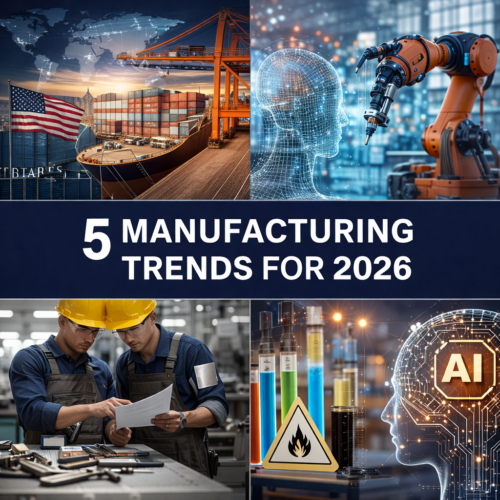
Five Manufacturing Trends to Watch in 2026

As the manufacturing sector moves into 2026, companies are adjusting to new economic pressures, emerging technologies, and ongoing workforce challenges. Several trends are shaping the industry’s trajectory this year, with implications for investment, operations, and strategic planning.

Trade and Tariff Uncertainty Continues to Influence Decisions
Manufacturers are still navigating the effects of shifting tariff policies and trade uncertainty, which have influenced production costs, sourcing strategies, and overall demand. Economic indicators at the end of 2025 showed manufacturing activity dipping, in part due to unclear trade policy and weak external demand, reflecting the industry’s sensitivity to tariff structures and global conditions. This uncertainty remains a key factor in planning and investment decisions for 2026.

Investment in Domestic Production and Advanced Sectors Remains Strong
Despite policy challenges, capital investments in domestic production are expanding. Demand for semiconductors, data center components, and other high-tech manufacturing continues to attract substantial investment, driven by both private commitments and public incentives. This trend underscores the ongoing focus on strengthening U.S. production capabilities and expanding capacity in key sectors.

Workforce Development and Skills Training Are Increasing Priorities
Finding qualified workers remains a persistent challenge. As manufacturers adopt more advanced technologies, including automation and digital tools, the need for a skilled workforce grows. Federal and state workforce development initiatives are ramping up support for training programs that align with in-demand industry needs. This focus on workforce transformation aims to close the skills gap and support long-term competitiveness.

AI and Automation Continue to Reshape Manufacturing Operations
Manufacturers are increasingly integrating artificial intelligence and automation into their operations to improve productivity, streamline processes, and reduce costs. These technologies are being deployed not just at the highest levels of production planning, but throughout shop floors to enhance quality control, predictive maintenance, and data analytics. As AI adoption expands, companies are betting that digital and smart manufacturing investments will be key drivers of future competitiveness.

Regulatory and Policy Dynamics Affect Industry Strategy
Shifts in environmental regulation and chemical policy are among the broader regulatory changes facing the industry in 2026. As agencies adjust rules and states enact new legislation, manufacturers must respond with compliance strategies that balance operational needs and regulatory requirements. These evolving frameworks influence production planning and long-term planning.

From Job to Career: Why Manufacturing Success Is About Mindset Before Skillset

When people think about success in manufacturing, they usually focus on skills: machine operation, blueprint reading, programming, quality inspection, or technical certifications. Skills matter—but they are not where success truly begins.

In reality, the biggest difference between someone who simply works a manufacturing job and someone who builds a long, lucrative career in precision manufacturing comes down to mindset.

Skillset gets you in the door.
Mindset determines how far you go.

The Skill Myth

There is a common misconception that manufacturing careers are only for people who already “know how to do it.” This belief discourages capable, motivated individuals from even considering the industry.

The truth is far simpler:
Most successful manufacturing professionals did not start with advanced skills.

They started with:

  • A willingness to learn
  • Consistency
  • Accountability
  • Pride in their work

Skills are teachable. Mindset is not—at least not easily.

Companies can train someone to run a CNC machine, inspect a part, or follow a process. What they cannot easily train is attitude, work ethic, or ownership.

That is why mindset always comes first.

What Employers Actually Look For

When manufacturers say, “We can’t find good people,” they are rarely talking about a lack of technical knowledge alone.

What they usually mean is:

  • People who show up late or inconsistently
  • People who do the minimum and stop
  • People who blame machines, supervisors, or processes instead of improving
  • People who treat the job as temporary—even when the opportunity is long-term

On the other hand, the individuals who advance quickly often share the same core traits:

  • They ask questions
  • They care about quality
  • They take responsibility when something goes wrong
  • They look for ways to improve instead of excuses

Those traits have nothing to do with skill level on day one.

Mindset Turns a Job Into a Career

A job is transactional.
A career is developmental.

People with a job mindset ask:

  • “What do I have to do today?”
  • “Is this my responsibility?”
  • “When does my shift end?”

People with a career mindset ask:

  • “How can I get better at this?”
  • “What’s the next role I could grow into?”
  • “What does this company need from me to trust me more?”

That difference compounds over time.

Two people can start on the same day, at the same machine, with the same pay. Five years later, one is still doing the same work, while the other has moved into setup, programming, quality, leadership, or engineering support.

The difference is not intelligence.
It is mindset.

Precision Manufacturing Rewards the Right Attitude

Precision manufacturing is not about rushing or cutting corners. It is about consistency, discipline, and attention to detail. These environments reward people who:

  • Take pride in accuracy
  • Respect standards and procedures
  • Understand the impact of their work downstream

This is why mindset matters even more in precision environments. One careless decision can cost thousands of dollars. One committed individual can prevent it.

People who approach their role with professionalism—even in entry-level positions—stand out quickly. Supervisors notice. Opportunities follow.

Why Skill Can Be Taught—but Mindset Cannot

Most manufacturing companies are willing to invest time and money into training people who show the right attitude. What they are unwilling to do is repeatedly invest in people who do not take the opportunity seriously.

This is why mindset is often the real hiring filter.

A candidate with limited experience but strong work ethic is often more valuable than a skilled candidate who lacks reliability, humility, or accountability.

That is not theory—it is lived experience across the industry.

The Floor2Future Philosophy

At Floor2Future, we believe manufacturing careers are built from the inside out.

That means:

  • Developing mindset before mastery
  • Teaching expectations before techniques
  • Preparing people not just to get hired—but to succeed

Floor2Future exists to help people move from the manufacturing floor to the future of their career by focusing on what truly drives long-term success.

We welcome individuals who may not have prior manufacturing experience but demonstrate:

  • A strong desire to learn
  • Respect for structure and standards
  • Pride in personal performance
  • Commitment to growth

Skills can follow. Careers can grow.

For Those Considering Manufacturing

If you are exploring manufacturing as a career path, ask yourself this:

  • Are you willing to learn?
  • Are you willing to be consistent?
  • Are you willing to take responsibility for your performance?

If the answer is yes, manufacturing can offer stability, strong income, advancement opportunities, and long-term growth—often without the burden of student debt.

Precision manufacturing rewards people who take it seriously.

For Those Already in the Industry

If you are already working in manufacturing, mindset is still the differentiator.

Advancement rarely comes from doing just enough. It comes from:

  • Being dependable
  • Solving problems instead of avoiding them
  • Taking ownership beyond your job description
  • Building trust through action

That is how careers are built—quietly, consistently, and over time.

Conclusion: Mindset Is the Foundation

Manufacturing does not need more people who are simply looking for a paycheck.

It needs people who are looking for a path.

Skill opens the door.
Mindset keeps it open.

Floor2Future exists to help rebuild the incredible opportunities of precision manufacturing—by connecting motivated people with careers that reward effort, growth, and professionalism.

If you are ready to move from a job mindset to a career mindset, the future is closer than you think.

Why Codie Sanchez Is One of the Most Important Voices in Modern Motivation

Motivation today is often shallow. Social media is full of hype, shortcuts, and promises of overnight success that don’t survive contact with reality. That’s why Codie Sanchez stands out so clearly in the noise.

Her message isn’t about escaping work.
It’s about owning value.

And that distinction matters.

Motivation Rooted in Reality

What makes Codie Sanchez compelling is not just her success—it’s how she frames success. She doesn’t sell fantasy lifestyles or passive income myths. Instead, she focuses on something far more powerful: boring businesses, real cash flow, and disciplined execution.

Her motivation lands because it’s grounded in truth:

  • Wealth is built, not wished for
  • Ownership matters more than optics
  • Consistency beats charisma
  • Most opportunity lives where most people refuse to look

That message resonates deeply with people who are tired of being told that success requires perfect timing, elite connections, or luck.

Contrarian Thinking That Actually Works

Codie’s philosophy challenges the modern obsession with startups, apps, and viral ideas. She repeatedly points people toward industries that are overlooked, unglamorous, and quietly profitable—laundromats, car washes, service businesses, and operational companies that have existed for decades.

Why is this motivating?

Because it reframes opportunity.

Instead of asking, “How do I compete with everyone else?”
She asks, “Where is nobody paying attention?”

That shift alone opens doors for people who thought success was out of reach.

Motivation Without Excuses

What separates Codie from many motivational figures is her intolerance for excuses—especially the socially acceptable ones.

She challenges:

  • The belief that college guarantees success
  • The idea that working harder is pointless
  • The narrative that opportunity is gone

Instead, she emphasizes personal responsibility and leverage. Not in a harsh way—but in a clear, adult way.

Her motivation doesn’t say, “You deserve this.”
It says, “You can earn this.”

That difference is subtle—but powerful.

Why Her Message Resonates With Builders

Codie speaks directly to people who want to build, not perform.

Builders understand:

  • Systems matter
  • Ownership creates leverage
  • Long-term thinking wins
  • Reputation compounds

Her content attracts operators, managers, tradespeople, and disciplined professionals—the kinds of people who don’t need hype, they need direction.

That’s why her message aligns so well with modern manufacturing, skilled trades, and workforce development. The same principles that make a small business successful—process, accountability, execution—are the same principles that build strong careers.

The Ownership Mindset

One of Codie’s most motivating contributions is how clearly she frames ownership.

Ownership is not just about businesses. It’s about:

  • Owning outcomes
  • Owning mistakes
  • Owning learning curves
  • Owning long-term results

This mindset is transferable. Someone may start by owning their performance on a manufacturing floor, then a department, then a business unit—or eventually a business itself.

Codie motivates people to stop waiting for permission and start building leverage where they are.

Why This Matters Right Now

We’re in a moment where many people feel stuck:

  • Rising costs
  • Career uncertainty
  • Job hopping without direction
  • Burnout without progress

Codie’s message cuts through that paralysis by offering something concrete: build or buy something real.

Not tomorrow.
Not “someday.”
But methodically, over time.

That’s motivating because it restores agency.

Motivation for the Long Game

Codie doesn’t preach hustle culture for the sake of exhaustion. She advocates for focus, patience, and intelligent effort. Her motivation is not loud—but it lasts.

She reinforces that:

  • Progress is often invisible early
  • Mastery takes time
  • Small wins compound
  • Boring done well beats exciting done poorly

That’s the kind of motivation that sustains people through the unglamorous middle—where most success is actually built.

Why People Trust Her

Trust is rare in motivational spaces. Codie earns it because:

  • She shows numbers, not just quotes
  • She explains risks, not just upside
  • She shares failures, not just wins
  • She respects work

Her credibility comes from alignment between message and action. That consistency is motivating because it proves the model works.

A Model Worth Paying Attention To

Codie Sanchez represents a shift away from performative motivation toward practical empowerment. She motivates people not by telling them who they could be—but by showing them what they can build.

In a world obsessed with shortcuts, her message is refreshingly disciplined:

  • Learn
  • Buy
  • Build
  • Improve
  • Repeat

That’s not flashy.
But it works.

And for people serious about careers, ownership, and long-term success, that’s the most motivating message of all.

From Factory Floor to The Future Of YOUR Career: What Modern Manufacturing Really Looks Like

When many people picture a manufacturing job, their minds jump to outdated ideas—grimy factory floors, repetitive tasks, and low pay. But that image couldn’t be further from reality today. Modern manufacturing is bright, clean, and powered by cutting-edge technology. It’s a world of robotics, data dashboards, and automation — and most importantly, it’s full of opportunity, upward mobility, and high pay.

Let’s take a look at what the new manufacturing landscape looks like from a worker’s perspective—and how Floor2Future helps people get there.


A New Era: High-Tech, High-Skill, High-Pay

Step inside a modern manufacturing facility, and you’ll immediately notice the difference. The air is clean. The space is well-lit. Machines operate with precision and quiet confidence. And instead of workers doing monotonous tasks on an assembly line, you’ll find skilled professionals operating advanced systems, solving problems, and keeping the production process running smoothly.

This is no longer the manufacturing of decades past. Today’s facilities use robotics, artificial intelligence, CNC machining, and real-time data analysis to produce everything from aerospace components to electric vehicles. These aren’t just jobs — they’re tech-driven careers, and the workers who fill these roles are in high demand.

And with that demand comes excellent compensation.


Let’s Talk About Pay

The pay in modern manufacturing is one of its biggest advantages — and often one of the most surprising. In an era where service jobs may offer minimum wage and limited benefits, manufacturing stands apart. Entry-level roles often start well above average hourly wages, and workers can quickly increase their income as they gain experience or complete certifications.

Here are a few real-world examples of what workers can earn:

  • Entry-level machine operators or assemblers often start at $18–$22/hour.
  • Skilled CNC machinists, quality technicians, or maintenance techs routinely earn $25–$35/hour.
  • With just a few years of experience and the right certifications, team leads or process improvement specialists can break into the $70K–$90K+ range annually.

In addition to base pay, many companies offer:

  • Shift differentials (extra pay for night or weekend shifts)
  • Overtime (time-and-a-half or double-time pay)
  • Bonuses or profit sharing
  • Full benefits, including health insurance, retirement plans, and paid time off

This level of financial security isn’t just life-changing—it’s life-building. Workers in modern manufacturing can buy homes, support families, save for the future, and enjoy real career satisfaction.


Clean, Safe, and Team-Oriented

Another misconception people have about manufacturing is safety and cleanliness. But today’s facilities invest heavily in both. Floors are spotless, tools are organized, and digital systems ensure everyone knows exactly what needs to happen, when, and how.

Workplaces are designed with ergonomics, efficiency, and safety in mind. Many companies operate under continuous improvement models like Lean or Six Sigma, which not only improve production but also empower workers to suggest improvements and fix problems at the source.

From a worker’s perspective, this means:

  • You’re respected and heard.
  • You’re part of a team, not just a number.
  • You’re working in an environment designed to help you succeed.

The Role of Floor2Future: Your Launchpad into Manufacturing

So how do you break into this world if you’ve never worked in manufacturing before? That’s where Floor2Future comes in.

Floor2Future.com helps people gain the skills, certifications, and confidence they need to launch rewarding careers in today’s manufacturing industry. Through focused training programs—offering instruction in Lean manufacturing, blueprint reading, measurement tools, and leadership—Floor2Future prepares job seekers for in-demand roles with great starting pay and clear growth paths.

Best of all? These aren’t years-long college programs. In just a few weeks, you can:

  • Gain industry-recognized skills
  • Earn credentials that matter to employers
  • Get connected to local manufacturers hiring right now

And it doesn’t stop there. Floor2Future stays with you, helping you build a pathway to advancement. Whether you want to become a team leader, process expert, or even transition into engineering or operations, the foundation starts here.


Growth, Advancement, and Long-Term Security

One of the best parts of modern manufacturing is that you don’t stay stuck. Workers who start at entry-level positions can move up quickly. Many employers promote from within and offer regular raises tied to skill growth and performance.

In fact, the entire industry is built on continuous learning. Companies encourage employees to take on new training, certifications, and challenges. You might start as a production associate and find yourself managing a team or overseeing quality systems within a couple of years.

From a worker’s point of view, that means:

  • Clear steps to higher pay
  • Tangible recognition for your skills
  • A sense of progress and momentum

Final Thoughts: Manufacturing Is the Future

Modern manufacturing is not just a job—it’s a future. It offers workers stability, strong pay, continuous learning, and the chance to be part of something meaningful. It’s where technology and people come together to create real products—and real careers.

Whether you’re looking to start fresh or level up your current path, Floor2Future gives you the tools and support you need to step confidently into this new era.


Ready to get started?

Work Ethic Training

About Work Ethic Training

The Work Ethic Training at Floor2Future.com is designed to build the habits, mindset, and professionalism that today’s employers value most. This training teaches candidates how to show up consistently, stay focused, keep production moving, and become dependable team members that companies can trust. Participants learn the difference between the “why we can’t” mindset and the “how we can” approach that drives success, promotions, and long-term opportunity. By understanding expectations, accountability, and workplace behavior, graduates enter the workforce confident, reliable, and ready to excel. This program transforms workers into high-value contributors with a clear path to career growth.

Work Ethic Training — Course Objectives

Work Ethic Training — Course Objectives

By the end of this training, participants will be able to:

1. Understand Expectations

  • Describe what workers expect from companies and what companies expect from workers.
  • Identify how alignment in expectations builds trust, stability, and mutual success.

2. Demonstrate Strong Workplace Behavior

  • Show consistent focus, reliability, and discipline in daily tasks.
  • Recognize how personal actions—such as keeping machines running or staying off the phone—directly impact productivity and team performance.

3. Apply the “How We Can” Mindset

  • Distinguish between the “why we can’t” and “how we can” attitudes.
  • Use a proactive, solutions-focused approach to overcome workplace obstacles.

4. Build a Reputation of Dependability

  • Understand how reliability, punctuality, and accountability shape the way supervisors and teammates view their potential.
  • Take ownership of their role in company success.

5. Strengthen Professional Presence

  • Demonstrate workplace communication, body language, and behavior that reflect professionalism and leadership readiness.
  • Recognize how their actions influence others on the floor.

6. Develop Long-Term Career Mindset

  • Identify how daily habits translate into career growth, promotions, and leadership opportunities.
  • Connect their personal performance to future advancement within manufacturing.

7. Use Real-World Examples to Improve Performance

  • Analyze examples of good and poor work ethic and apply the lessons to their own behavior.
  • Develop strategies to continuously improve their workplace habits.

8. Reflect on Personal Growth

  • Evaluate their own work habits honestly.
  • Create a personal improvement plan focused on reliability, professionalism, and contribution.

Work Ethic Training — Course Methodology

The Work Ethic Training program at Floor2Future.com uses a practical, real-world teaching approach designed to help participants immediately apply what they learn on the job. The course blends short, high-impact video lessons with clear written instruction, real workplace examples, and reflection exercises that encourage learners to think about their own habits and behaviors. Instead of abstract theory, every lesson focuses on situations workers face daily—keeping production moving, minimizing distractions, communicating professionally, and demonstrating reliability under pressure. Learners are guided through mindset-shifting concepts like the “how we can” approach, followed by actionable steps they can use to build a strong professional reputation. The training combines self-paced learning, scenario-based thinking, and personal accountability to create lasting behavioral change. By the end, participants not only understand what strong work ethic looks like—they know how to practice it, improve it, and use it to grow their career.

Work Ethic Training — Course Material (100 Words)

The Work Ethic Training course provides clear, practical material designed to strengthen reliability, professionalism, and personal accountability in the workplace. The content includes high-impact video lessons, real-world manufacturing examples, mindset training, and written modules that break down essential behaviors such as staying focused, keeping production moving, minimizing distractions, and demonstrating consistency. Learners explore the difference between the “why we can’t” and “how we can” mindset and practice applying this approach to everyday challenges. The material also covers communication, workplace presence, responsibility, and long-term career habits. Reflection questions and scenario-based exercises reinforce the lessons to ensure lasting improvement and real job-ready growth.

Floor2Future.com Overall Objective

The purpose of this course is to prepare individuals for long-term success in today’s modern manufacturing environment by building the knowledge, habits, and professional behaviors that employers value most. Each course is designed to develop practical, real-world skills that increase confidence, improve performance, and create clear pathways for career advancement. Through structured lessons, relatable examples, and actionable guidance, learners gain the tools needed to become reliable, safe, and high-performing team members. The intent of this training is not only to enhance technical ability, but also to strengthen character, mindset, and professionalism—empowering every participant to grow, succeed, and shape their future.

leadership taining
Elevate Your Career with Leadership Skills That Matter: Join Our Leadership Development Program at Floor2Future

In today’s ever-evolving manufacturing and technology sectors, the demand for strong leaders has never been greater. Whether you’re stepping into a new supervisory role or looking to refine your leadership style, effective leadership is more than just a title. It’s the ability to inspire teams, drive change, and navigate challenges with a clear vision. At Floor2Future, we’re committed to developing the next generation of leaders through our comprehensive Leadership Development Program.

Why Leadership Matters

Leadership is not just about managing tasks or delegating responsibilities. It’s about inspiring others to achieve their best, fostering a culture of trust and collaboration, and steering your team through both calm and turbulent times. Our Leadership Development Program is designed to equip you with these essential skills, making you not only a leader in title but a leader in action.

What Our Leadership Program Offers

Our program is carefully crafted to meet the needs of professionals across the manufacturing and technology industries. Here’s what you can expect:

  • Personalized Training Modules: We understand that every leader’s journey is unique. Our curriculum includes modules on effective communication, conflict resolution, decision-making, and more—tailored to fit your career goals.
  • Real-World Application: You’ll engage in scenarios and case studies drawn from the manufacturing and technology fields, ensuring that what you learn is directly applicable to your workplace.
  • Mentorship and Support: Our experienced mentors are here to guide you every step of the way, providing feedback and helping you build confidence as you grow.

The Two Perspectives: Benefits for Companies and Individuals

From a company perspective, having all leaders aligned on the same core principles ensures that everyone is leading their teams in a unified way. This consistency fosters a cohesive organizational culture where everyone is on the same page. When leaders share the same approach and values, it creates a stable environment where employees know what to expect and feel more confident and motivated.

From an individual standpoint, our program provides a solid leadership structure that participants can make their own over time. It’s not about fitting into a rigid mold; it’s about giving you the foundational tools and principles that you can adapt to your own style. Over time, you’ll build on this structure and develop a leadership approach that’s uniquely yours.

How This Program Fits Into Your Career Path

By joining our leadership program, you’re not just learning skills—you’re investing in your future. Leaders are in high demand, and the ability to lead effectively can open doors to new opportunities, promotions, and career advancement.

Join Us Today

Ready to take the next step? Our Leadership Development Program is open for enrollment, and we’d love to have you on board. Let’s build the future of leadership together.